


In a world of escalation of the cultural and political divide, how do you find a path to compromise?
- Jul 19, 2022
- 13 min read
Updated: Jul 15, 2023

People usually don’t like to talk about politics. While many have their own unique reasons, the fact of the matter is that most people don’t even know enough about politics so that they can have a meaningful discussion, without throwing unfounded opinions into the air.
That is a sad reality of our modern society, as many people simply believe that politics are detached from their daily lives, and so they don’t give it enough thought. The truth could not be further from that point of view. Politics is in fact so much intertwined with our daily lives, that it can easily be the most deciding factor in almost everything we do; the thing is most people don’t know or don’t care until it directly affects them.
Politics are important, so much so, that every law that we follow has been written by politicians. The future of every country is its people, and so people should be aware of how much politics does affect and can affect their lives.
Culture is everything!
Change the culture and you change society and the politics. The same cannot be said for either society or politics. Culture is how we are raised; it is how we identify with the world; it is how we interact with each other, and it is how we raise the next generation. Culture represents who we are, where we have been, the struggles of the generations before us, and the hopes for the generations that come after us. In our culture we give thanks to God and celebrate with each other at sporting events, rock concerts, and dramatic performances. Culture tells our story, revealing not only our best but also the pains, the sorrows, and how we have had to do to overcome it all. Culture is the life of a society that grows to become a nation.
Culture and society are co-existing. One does not or cannot exist without the other. Culture and society may have some common elements, but the two are not the same; they are not identical. The essential difference is that society is composed of people while culture consists of knowledge, ideas, customs, traditions, folkways, mores, beliefs, skills, institutions, organizations, and artifacts.
Cultures act in a manner to preserve and honor long-held values and traditions. Societies by their nature. Generate a progressive force of change. That inevitably conflicts and threatens established cultures and their heritage. Politics attempts to be a mediator within the conflicts. By injecting a third dynamic of “compromise”. That’s often deficient in strength to overcome the other two forces of inertia.
“For these reasons, a society can be said to be defined by its boundaries, a culture by its horizons.” — James P. Carse, Finite and Infinite Games: A Vision of Life as Play and Possibility

Why do we need to understand the idea of culture in society and politics?
Example:
First fish: Isn’t water wonderful?
Second fish: What is “water”?
Both culture and society, as with water and aquatic life, generally, embrace the totality of our existence, but in fundamentally different ways. Politics, a protean approach, if there ever was one, takes whatever teleological form necessary, just as at other times it is not about ends but means. In short, how does one go about getting a perspective on either of our boundaries or our horizons?
The first to attempt not only to “understand” this but to explicate it was Plato. One of the many revealing suggestions he made in Republic concerned the role of poets who were to encompass the citizens with such art as would “lead them unawares from childhood to love of, resemblance to, and harmony with, the beauty of reason.” Naturally, for Plato, “reason” refers to his view of things, generally, politics and the role of government, in this specific. “Unawares,” of course implies we as citizens are to be deceived for the good of the whole. (Sound familiar?)
Much of political thought remains Platonic. But contrast:
“[Culture] is the sum of all that has spontaneously arisen for the advancement of material life and as an expression of spiritual and moral life—all social intercourse, technologies, arts, literature, and sciences. It is the realm of the variable, free, not necessarily universal, of all that cannot lay claim to compulsive authority.” — Jacob Burckhardt, 1818 - 1897, Swiss cultural historian
One problem we face in challenging our understanding is that virtually all authors on the topic are fish in water. I find Locke brilliant, for instance, but his essays argue for ways to proceed that come from within a socio-political point of view. I find Foucault problematic, his discourse on the ubiquity of power relations tantamount to crustaceans duking it out on the seabed. One problem we face in challenging our understanding is that virtually all authors on the topic are fish in water. I find Locke brilliant, for instance, but his essays argue for ways to proceed that come from within a socio-political point of view. I find Foucault problematic, his discourse on the ubiquity of power relations tantamount to crustaceans duking it out on the seabed.
“The great and chief end therefore, of Men’s uniting into Commonwealths, and putting themselves under Government, is the preservation of their Property; to which in the state of nature there are many things wanting.” — John Locke, 1632 - 1704
Hegel observed, “just as the blowing of the winds preserves the sea from the foulness that would be the result of a prolonged calm; so also, corruption in a nation would be the product of prolonged, let alone ‘perpetual’ peace.” I’m pretty sure that boy never pulled his head out of his ass, much less out of the water.
My own life has been unusual, not so much a fish out of water as a Galapagos iguana who lives on land, but, when hungry, takes a breath, and submerges. Starting with entry into high school, I made firm conclusions about my life that set me on a little-trodden path; but I was firm in staying on it.
I was drawn to Thoreau and Emerson and the transcendentalists; to Jane Austen and her ability to penetrate the human condition, and to Dostoevsky and certain other existentialists, such as Kierkegaard. They offered me hints of something beyond the mundane reality playing out all around me.
Those are elements of the Finite realm. Rather, in college, I rose as an avid researcher and reader — naturally curious — a form of performance purely. Infinite. I became an intellectual critique of society and its many ills inclusive of politics from a young age. I became fully part of a younger generation of new age hippies, which was a reprise of the 60’s hippie era and culture of transcendentalism; akin to dolphins freely cavorting in the ocean. Sadly, then, to watch society sink to the pressure-packed depths again.
I expect all the present governing, economic, social structures and ideologies to fall apart and disappear, as they are all built by/for our inherently self-centered, self-serving and subjective nature.
And as such, they are incompatible with Nature's fully integrated, interdependent system, which is now forcing us — according to evolution's relentless direction — to become compatible by achieving integration within a global Human society.
So — either through increasing blows, intolerable suffering, or as a result of a unique, purposeful and practical educational method — Human society will transform into a fully integrated, mutually responsible, mutually complementing global network.
We will have no other choice but to rebuild our relationships, environments using an instinctual evolutionary template that has survived eons: the law of nature.
“Human beings are born with different capacities. If they are free, they are not equal. And if they are equal, they are not free.” ― Aleksandr Solzhenitsyn
Understanding the Law of Nature
Firstly, we need to know why society is collapsing.
It is collapsing - as many times before in history’s recurring vicious cycles - as regardless of what governing, economic, social system we use, our inherently selfish, egotistic, exploitative nature sooner or later distorts, corrupts civilization to the point of total breakdown.
Then we start again until we reach the same result. Now we are at the end of our own civilization, helplessly waiting for the inevitable collapse. Unfortunately, contrary to previous times, now we don't even have new ideologies, bright, promising, attractive revolutionaries pulling us towards the future.
We are at the end of the road!
The solution is a unique upbringing, education, that can teach us how to rise above, work, exist against our inherent impulses, reactions, “solutions”. We need to learn to shift from existing only for our own sake to existing for the sake of the whole collective, the whole system. And as a result, new horizons open, creating a new path of development which was blocked from us before.
Furthermore, compromising is an essential tool, as it is used to ensure a peaceful environment; this is seen as the give and take necessary to create a balanced situation to end a disagreement. It can help smooth over conflicts in a variety of situations and settings.
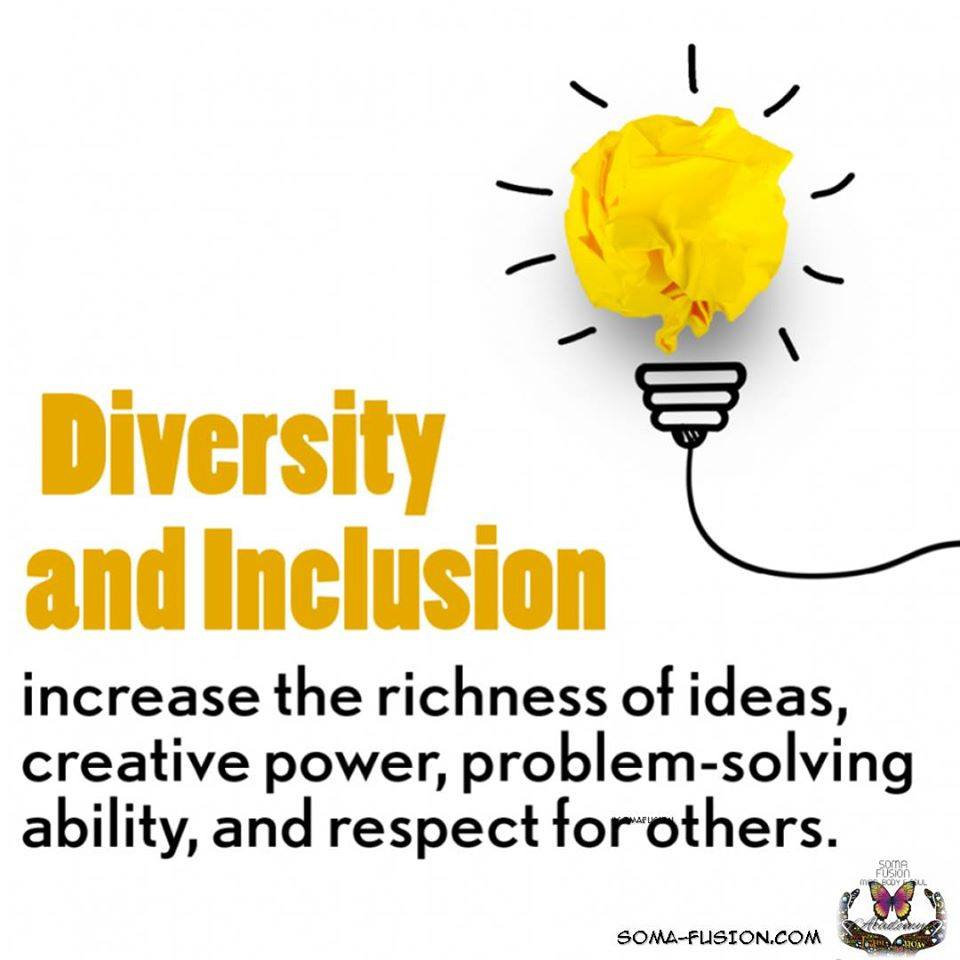
Compromise will promote collaboration between people. A more culturally diversified society creates a large variety of capabilities, perspectives and attitudes) and develops more skills in problem solving, generating more creative solutions.

Building Cultural Synergy in the Face of Compromise
Cultural differences are inevitable, but we shouldn’t let them stop us from connecting and exchanging ideas with people from all over the world. We must remember that we come from different parts of the world and have diverse cultural backgrounds, but we need to find a way to create an environment where we can feel comfortable and fit in.
The best way to understand another ’s culture is to know the differences. It’s important to respect those differences and not change each other’s personal cultural beliefs. In different cultures, people have different ways of thinking, values, and ways of looking at the world. Here are some of the most important cultural differences:
1. Family Codes: Family Structure and Relationships
In some cultures, there are differences in communication behavior between siblings depending on age and gender, sometimes reflected in local language and even body language. Each person has an assigned status in the family (e.g., some people are leaders, others are educators, etc.), while in other cultures each person can decide for himself or herself.
2. Spiritual Beliefs
In different cultures, people have different ways of thinking, values, and ways of looking at the world. For example, in some places, they believe in ghosts, while in others they don’t. Some people believe in God; some believe the world was created without a creator, and others believe there are many gods. The cultural diversity of spiritual beliefs can make it impossible for everyone to be friends with each other. But if you understand these differences, you can get along better with them.
3. Respect
Treating all people with respect is a universal concern. But even something as simple as saying hello or goodbye can vary greatly. In some parts of the world, it’s considered rude to greet or say goodbye first and leave it up to your counterpart to do the greeting. In other areas, it’s considered polite to greet others before saying anything else. Sometimes politeness has to do with body language: In some countries, bowing is a sign of respect; in others, looking others in the eye is a sign of transparency or honesty, while in other cultures it’s considered impolite. There are also big differences in punctuality from culture to culture. In some places, being on time is more important than respecting another person’s schedule, while others consider it inappropriate to be early. What’s considered “late” also varies from place to place. Personal space is also perceived as respect in some cultures. For example, in some countries, people exchange information all the time, while in other cultures this is considered intrusive.
4. Tone of Voice
People always talk about the language barrier, but the tone of voice is one of the most important factors that affect communication in any culture. In many parts of the world, it’s considered rude to speak bluntly or directly. On the other hand, they may be very direct in their tone. If you respond in return with a direct tone, it could be perceived as insulting or rude. Be aware of people’s different ways of communicating and adjust accordingly so you don’t offend anyone.
5. Showing Emotion
If you’re working in a diverse team, cross-cultural communication can vary in terms of showing emotion, and collaboration can be affected depending on the behavior of the individual. In some cultures, showing emotion is a sign of enthusiasm, while in others it can be perceived as a lack of stability and seriousness. In some cultures, empathy is shown, while in others it’s considered a weakness.

Bridging Cultural Differences
Most people tend to generalize others based on stereotypes and conventional ideas because they lack cultural competence. Bridging the cultural gap on a global scale means building a cultural bridge by changing what causes our cultural gap.
We, as a Society, Can Prevent Cultural Differences from occurring:
1. Education
Education is the best way to prevent cultural differences that could lead to incidents and misunderstandings. We can use education to teach people about other cultures and traditions, to promote tolerance and understanding.
Parents are the leaders of our unconscious bias and bear the greatest responsibility for narrowing the culture gap. They should talk to their children about why it’s important to accept a different culture, especially when vacationing in a different country. When parents share their own experiences with their children, it helps children develop a better cultural understanding of the world around them, and it will teach them to adapt their behavior in different circumstances in life.
In schools, educators should also teach students about different cultures and traditions. When a student learns about cultural boundaries, he or she can acquire the cultural competence to understand another culture. In this way, we can also promote better behavior of our future leaders in politics and international business when it comes to dealing with another culture and narrowing the cultural gap between different cultural backgrounds.
2. Global Communities
Getting people around the world to work together to solve common problems isn’t only a benefit, but a practical necessity today. And when we connect people around the world, they don’t just share information – they act. A diverse group may also host local or online events where people come together to learn about each other’s customs or share common interests. Such events are ideal for breaking down the cultural barrier between cultures and preventing cultural differences from escalating into crime or incidents.
3. Cultural Awareness of Conflictual Issues
What usually triggers conflicts between societies isn’t the cultural difference, but the lack of cultural awareness of a different background in connection with sensitive issues. Topic avoidance is a common strategy for keeping the peace. We talk about things we like, are familiar with, and are emotionally safe. However, avoiding topics of conversation is also a way to avoid understanding and empathy.
Conflictual topics such as politics and religion can be dangerous terrain and are often the main cause of cultural divide and stereotypes in a cross-cultural relationship, where the first misunderstanding between cultures often begins. Being mindful and learning about the culture of others can make a positive difference.
4. Food
Food has long been used as a means of effective communication. Food is the best medium of effective communication between people, which can be seen in the diversity of food in different countries around the world. This diversity has promoted the culinary aspect of life in our society. Food becomes an identity for each person and makes us unique, but also unites us.
Food plays a great role in improving our social relationships with each other. It expresses the culture, traditions, and history of a particular country. It’s also one of the best ways to learn about other countries. The food we eat isn’t only a source of nutrients that keep our bodies fit and healthy, but also a way to communicate with each other. Food festivals are often places where people interact with pleasure, and they’re a great way to promote cultural exchange.
5. Art and Music
Art and music are universal languages that transcend cultural barriers. People around the world love art and music of all kinds. By promoting art and music, we can show that it appeals to people from diverse cultural backgrounds and cultures. At the same time, we create a sense of community by bringing everyone together to appreciate things they enjoy together. Art and music also have other benefits for our creativity and mental health. Art inspires creativity, while music cultivates emotion. Not only do art and music bring people together, but they can also increase productivity.

How to Bridge Cultural Differences (RECAP)
If we’re sensitive to different needs and attitudes, we can avoid hurt feelings or misunderstandings.
Examples of how we as individuals can bridge cultural divides:
By being aware of our own values and beliefs and accept that others may have different ones.
By learning about the customs of those who live or work with us.
By accepting that our way of doing things isn’t always the best, but just another way.
By respecting the opinions and beliefs of others, even if they’re different from our own.
By remembering that we can all learn something from each other, including children and people older than ourselves.
By recognizing and appreciate our similarities and differences, because both enrich our lives.
By taking the time to really get to know others before we judge their beliefs, customs, habits, etc.
By appreciating diversity, we can help create a more peaceful world for all.

When We Respect the Values of Others, We Can Build a Culture of Peace
The key to bridging cultural differences is to listen – really listen – and not just wait for your turn to speak. When you focus on communicating rather than pushing your point, you worry less about how your next comment will be received or whether it’ll make you look good or bad. You think more about what you hear, and that creates opportunities for understanding and connection.
Finally, life is like a crossword puzzle. Just as you work out a crossword puzzle, you can figure out situations that do not treat you kindly. Get that concept of reality and you understand.
You’re held strongly by the influences of opinion, so if your self-opinion is not good, your dynamic is in jeopardy. You will always have disturbances because there is always chaotic behavior from disruptive souls. These are your teachers, whether you know it or not.
It isn’t until you overcome the victories that you will keep running into people teaching you the same lessons. Just as you have balances in your bank account, so has your soul a scorecard whether your mind knows it or not. It is when you stand up and turnaround that you find the determination to make changes. It is not until you're ready to make changes and have the foresight that you know what to do. It is called a hunch or idea. Through battling with society, you have lost this skill. Take aim and focus before you pull the trigger so you can be right on target. The Universe will always provide you with information because it wants your spiritual evolution so you can complete your stay in this realm of existence.
If you don’t know the answer, start with the things you do know. Understand the synergy of consciousness and of all which you’re linked to. When you add the power of belief with skilled alignment then your mind will work much quicker with solving issues.
Life is simpler than you think, and the solutions are not always in your head but in signs all around you. Your duties and tasks in life are no different than a crossword puzzle. It is you who must fill in the blanks.
Katie Kamara
Article Writer and Essayist/Internationally Published Author, Metaphysical Psychoanalyst, Spiritual Teacher & Counsellor, Radio Host, and Humanitarian
Comments